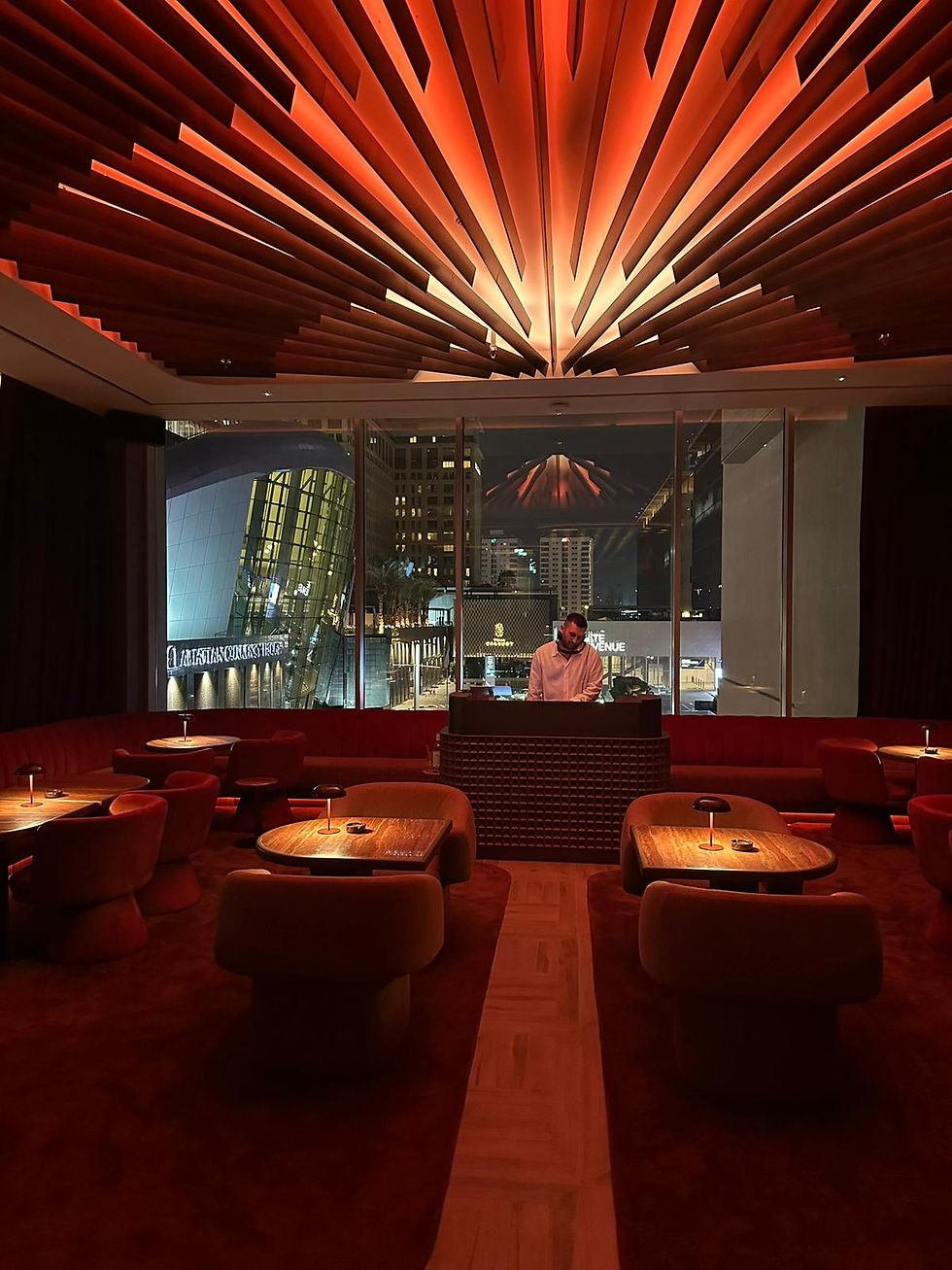
Kuuru
Client: Leylaty Group
Location: Riyadh, KSA
Date: March 2024
Cuisine: Nikkei
Add: ........
Kuuru is a Japanese Peruvian concept that embodies an elevated casual atmosphere and is truly unique to the Saudi Arabian market. Kuuru’s aesthetics and the F&B offering have formed a unique and dynamic causal Nikkei concept that blends both cultures innovatively.

Wasl Lagoon
Location
Dubai, UAE
Industry
Branded Residential
Client
Wasl Hospitality
A centralized food production and distribution model designed to standardize quality and unlock scale across a multi-hotel portfolio.
For Wasl in Dubai, the scope covered market research, strategy, feasibility, operational planning, and high-level pre-concept design. The project defined a Central Production Unit (CPU) that consolidates staff dining, production facilities, and new revenue streams into a single operational platform supporting both current and future assets.

The challenge
Fragmented production and inconsistent staff dining across a growing hotel portfolio.
From the client’s perspective, the issue was structural. Staff meals were decentralized, quality varied, and reliance on third parties limited control. At the same time, there was no shared infrastructure to support scale across multiple properties or to introduce new capabilities such as in-house production or catering. The challenge was to design a system that could centralize output without becoming rigid, while serving both operational and commercial objectives.


The APPROACH
Building a production ecosystem, not a single facility
The work defined the CPU as a multi-layered operation. At its core, it centralized staff meal production for all existing and pipeline hotels, improving consistency and control. Around this, additional functions were integrated—bakery, sausage production, and other specialized outputs—designed to create economies of scale and reduce external dependency. A catering arm was introduced as a commercial extension, positioning the platform to operate beyond internal demand. The strategy also incorporated a training and guest experience component, turning the facility into a knowledge and brand-building asset. This was supported by feasibility analysis and operational planning to ensure the model could scale alongside portfolio growth.

HOW DID WE STRATEGIZE A PLACE THAT WORKS?
Centralization as a quality lever
By consolidating production, the model shifts staff dining from a cost center with variable output to a controlled, standardized system.
Multi-function infrastructure
The CPU was designed to house production, catering, and training within one framework, allowing different functions to reinforce each other operationally and commercially.
Scalability embedded from the outset
Back-of-house logistics, service routes, and mobility solutions were integrated early, allowing the destination to function efficiently as it scales.

THE RESULT
The masterplan establishes a structured waterfront destination that connects hospitality, retail, and leisure into a single operational system.
As Wasl Lagoon develops, the framework supports long-term adaptability while maintaining coherence across its multiple components.