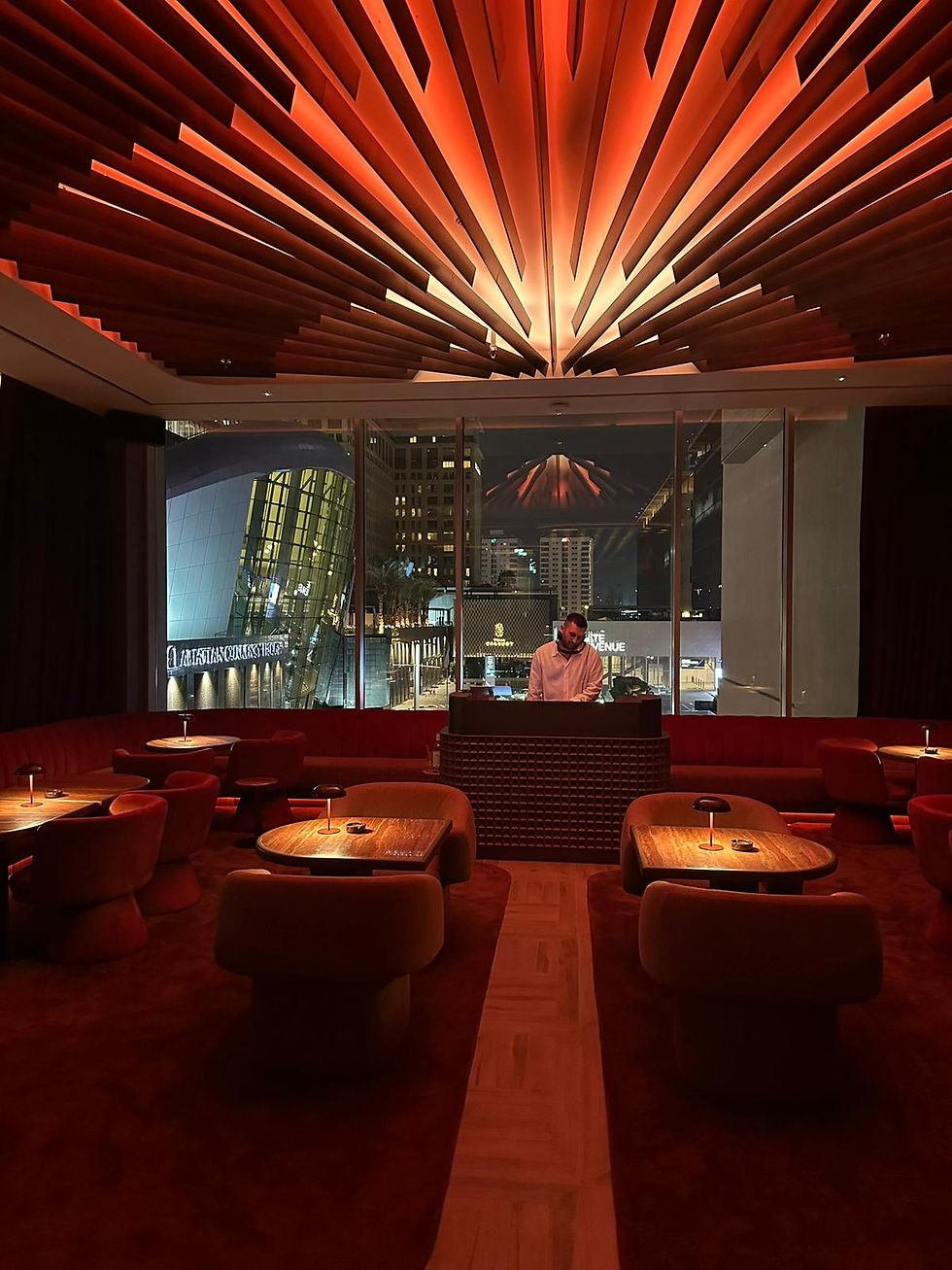
Kuuru
Client: Leylaty Group
Location: Riyadh, KSA
Date: March 2024
Cuisine: Nikkei
Add: ........
Kuuru is a Japanese Peruvian concept that embodies an elevated casual atmosphere and is truly unique to the Saudi Arabian market. Kuuru’s aesthetics and the F&B offering have formed a unique and dynamic causal Nikkei concept that blends both cultures innovatively.

Rua Al Madinah
Location
Makkah, KSA
Industry
Culture & Religious Districts
Client
Rua Al Madinah
Aligning 18 hotels and 100+ restaurants into a single, coherent ecosystem within a large-scale pilgrimage destination.
Within Rua Al Madinah, the masterplan spans multiple superblocks—Superblock 4, Superblock 5, and District 9—covering over 30 hotels in total. The scope included market research, F&B strategy, masterplan-level F&B structuring, concept development, branding, design strategy, design review, and operational planning, with the objective of creating a balanced and scalable dining landscape across the entire development.

The challenge
Coordinating a high-density F&B portfolio across a destination driven by pilgrimage flows and culturally specific demand patterns.
The complexity lay in managing scale without fragmentation. With a large number of hotels and venues operating within a shared environment, the risk was overlap between concepts, cannibalization between outlets, and a lack of differentiation across the district. This was compounded by demand cycles tied to pilgrimage periods such as Ramadan, where visitor volumes shift dramatically between low and peak seasons. The challenge was to design an F&B strategy that could maintain diversity, reflect regional guest preferences, and remain operationally stable under fluctuating demand.


The APPROACH
Structuring diversity without overlap
The strategy was developed through a combination of market research, data analysis, and spatial planning across the full masterplan. Guest profiles were analyzed to understand origin markets, culinary expectations, and behavior across different dining contexts. This informed the positioning of individual venues and their role within each hotel and across the wider district. Concept development was guided by the need to maintaindistinct identities while avoiding redundancy between outlets. Venue distribution and guest flow were planned at a macro level to ensure accessibility and balance across superblocks. The approach also incorporated seasonal scalability, allowing the F&B system to adjust between low occupancy periods and peak pilgrimage demand without disrupting core operations. Branding and design strategy were aligned with these principles to ensure consistency across multiple assets while preserving differentiation at the venue level.

HOW DID WE STRATEGIZE A PLACE THAT WORKS?
District-level coordination over isolated assets
F&B planning was approached across the entire masterplan, ensuring that each hotel and venue contributes to a wider, interconnected ecosystem rather than operating independently.
Diversity with controlled differentiation
Concepts were developed to reflect varied culinary preferences tied to key source markets, while maintaining clear distinctions to prevent overlap and cannibalization.
Built-in response to demand cycles
The strategy accounts for sharp fluctuations in visitor volume, enabling the F&B system to scale across periods such as Ramadan without compromising efficiency or guest experience.

THE RESULT
The F&B framework establishes a balanced and scalable ecosystem across one of the most complex hospitality masterplans in the region.
As Rua Al Madinah continues to evolve, the structure supports long-term adaptability while maintaining coherence across its hotels, venues, and guest experiences.